
Beyond the biodiversity metric: what we’re seeing at Sleight Farm
Ecological recovery rarely announces itself with a single dramatic moment.
More often, it reveals itself gradually: a new species appearing where it wasn't recorded before, a meadow beginning to develop its own character, or subtle changes in vegetation that suggest a habitat is moving in the right direction.
That's exactly what our latest botanical survey at Biofarm's 70-hectare habitat bank at Sleight Farm revealed.
Looking beyond species counts
Today's landscape tells a very different story to the one we inherited.
Previously a heavily grazed sheep and goat farm, much of the site supported relatively species-poor grassland with limited botanical diversity. Since then, management has focused on creating the conditions for nature to recover through conservation grazing, carefully timed hay cuts, and ongoing habitat monitoring.
The aim has not been to force change, but to allow the grasslands to re-establish themselves and reveal what remains within the site's natural seed bank.
The latest survey suggests that process is already underway.
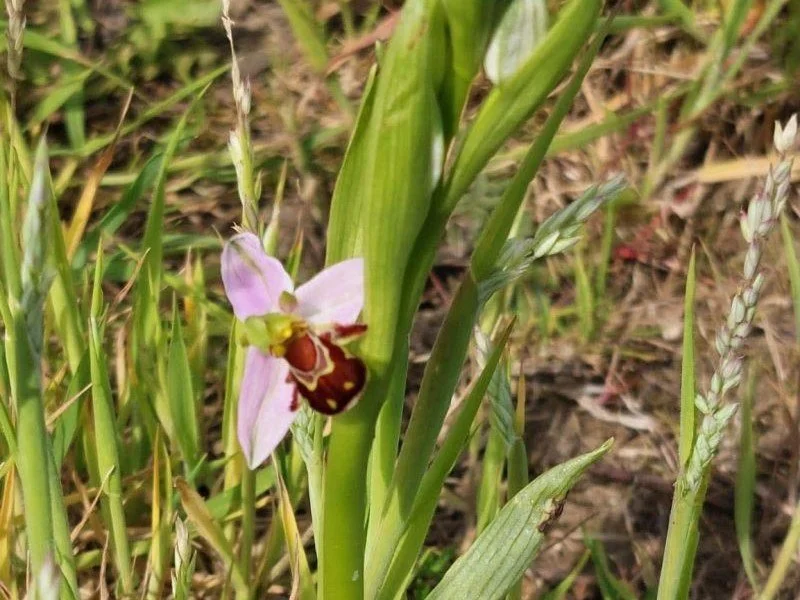
The survey recorded a range of lowland meadow indicator species, including bird's-foot trefoil, knapweed, betony, pignut and even a bee orchid – the first recorded on the site.
Their presence tells us the habitats are beginning to develop many of the characteristics we would expect to see in species-rich grassland.
Several parcels also showed measurable improvements in habitat condition. Areas that were previously classified as modified grassland are beginning to display characteristics associated with more diverse neutral grassland habitats, while one parcel is showing encouraging signs of developing towards lowland meadow.
Taken together, these findings suggest an overall increase in species richness across the site, while also providing evidence that habitats are moving in the intended direction.
Signs of a habitat finding its character
One of the most encouraging observations was the abundance of knapweed in an area being managed for lowland meadow.
Knapweed is a characteristic species of this habitat type, and seeing it establish so successfully provides a strong indication that the habitat is developing in the intended direction.
Combined with a diverse range of grass species, it suggests the meadow is beginning to find its character.
The role of long-term management
Habitat creation is only one part of the story.
As a Biodiversity Net Gain habitat bank, ongoing monitoring helps us understand how habitats are responding to management and track their progress over time.
The survey also highlighted the impact of ongoing management. Grazing by ponies and cattle is already influencing grassland structure, creating visible variation in vegetation height and composition across different areas of the site.
These changes may seem subtle, but they are important. Structural diversity creates opportunities for a wider range of wildlife – from invertebrates and small mammals to reptiles – and helps habitats become more robust over time.
The survey also identified opportunities to harvest green hay from some of the site's most species-rich areas and spread it elsewhere within the habitat bank. Rich in locally adapted wildflower seed, green hay can help establish more diverse grassland habitats while retaining the character of the local landscape.
This autumn, that work will begin, helping accelerate the spread of wildflowers across the site and supporting the next stage of habitat recovery.
Progress takes time
Successful habitat creation isn't about introducing as many species as possible as quickly as possible.
It's about creating the right conditions for habitats to establish and thrive over the long term.
The latest survey at Sleight Farm provides encouraging evidence that this process is underway. The emergence of meadow indicator species, improvements in habitat condition and visible responses to management all suggest the landscape is moving in the right direction.
Ecological recovery takes patience
But it's often the smaller signs — a bee orchid appearing for the first time, a meadow rich in knapweed, subtle changes in grassland structure — that tell us we're on the right path.
Because healthy ecosystems are built through countless small changes, accumulating over time.