
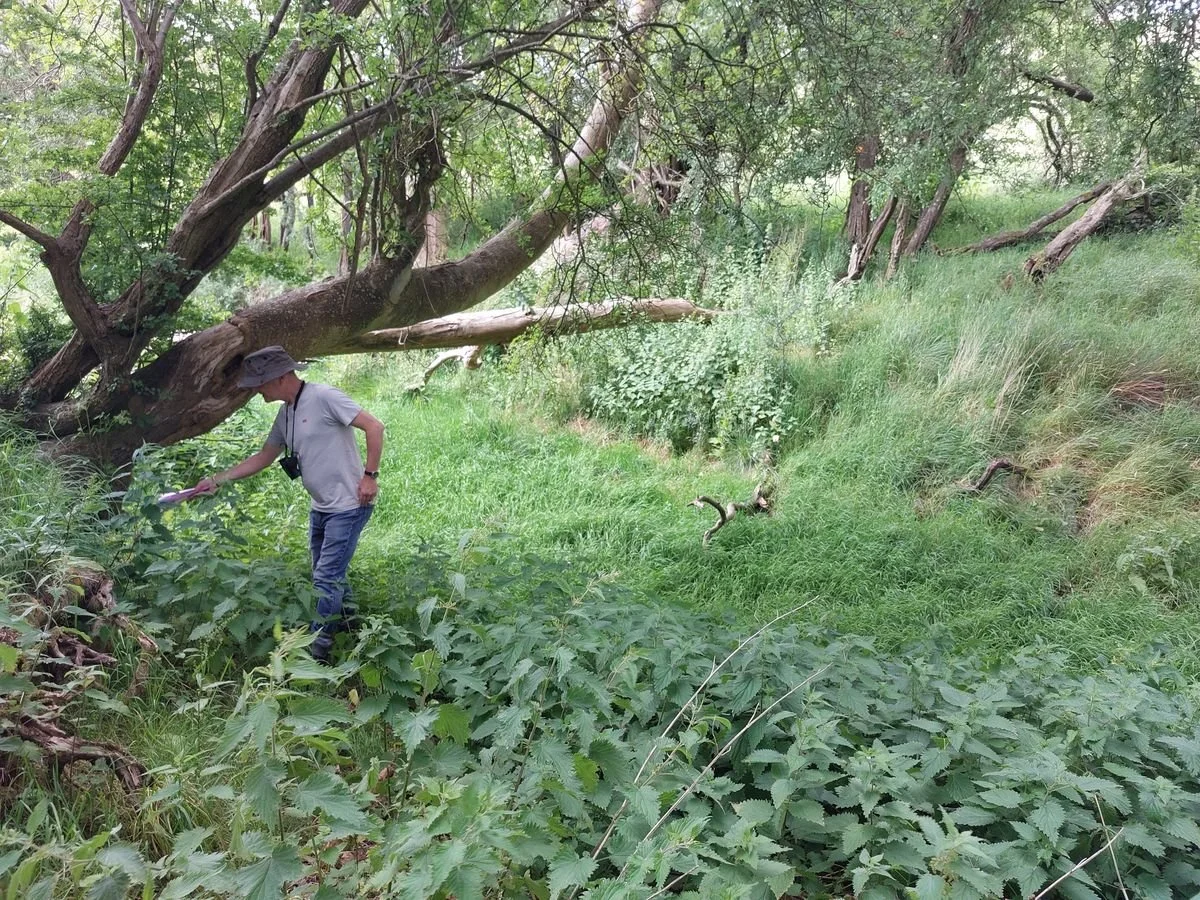
Developing woodland and scrub habitat at Sleight Farm, where ongoing ecological monitoring helps inform restoration and land management.
Independent bird surveys at Biofarm’s Sleight Farm Habitat Bank in Bath and North East Somerset have recorded 60 species to date, including 28 of conservation concern, showing how habitat restoration is supporting wildlife.
Set across 70 hectares in the Mendip Hills, Sleight Farm is Biofarm’s flagship habitat bank, where former grazing land is being restored into a mix of species-rich grassland, woodland, scrub, hedgerows and wetlands.
Since 2023, we’ve been restoring natural processes across the farm. Longhorn cattle, Exmoor ponies and Tamworth pigs help shape the landscape through conservation grazing, alongside carefully timed hay cuts and natural regeneration.
The latest independent bird surveys, carried out by TN Wildlife during winter 2025 and the 2026 breeding season, show how wildlife is responding.
The results speak for themselves
During the 2026 breeding season, 48 bird species were recorded, including six red-listed species of the highest conservation concern.
Bullfinch: Territories increased from five to nine, supported by berries, fruit and minimal vegetation cutting.
Blackcap: Territories increased from 12 to 22 as developing scrub provides more suitable habitat.
Chiffchaff: Territories rose from 24 to 27, with grassland and scrub offering suitable habitat.
Whitethroat: Two territories were recorded, compared with none in 2025, as birds made use of developing habitat around the farm’s boundaries.
Spotted flycatcher: Two possible territories were recorded for this red-listed species, supported by mature trees and insect-rich habitats.
Winter surveys also recorded around 200 redwings feeding on berries and fruit across the farm.
Learning from nature
Habitat restoration isn’t a fixed process. Regular ecological monitoring helps us see how wildlife is responding and adapt our management accordingly.
The latest surveys will inform the next phase of work, including retaining wider hedgerow margins, rotating grassland cutting, protecting developing woodland and scrub from grazing where appropriate, and exploring further wetland habitats.
It’s how we make informed decisions for the land and the wildlife it supports.
Delivering BNG that makes a difference
Sleight Farm has 374 registered Biodiversity Net Gain (BNG) units and is well placed to support development across Bath, Bristol and the wider West of England.
With units spanning lowland meadow, neutral grassland, woodland, scrub, hedgerows, trees and ditches, the site offers developers and ecologists a range of off-site BNG options to meet project requirements.
At Biofarm, our commitment goes beyond creating habitats. We manage, monitor and adapt them for at least 30 years, giving nature the time and care it needs to thrive.