
Eyes on nature: what wildlife reveals about a habitat in recovery
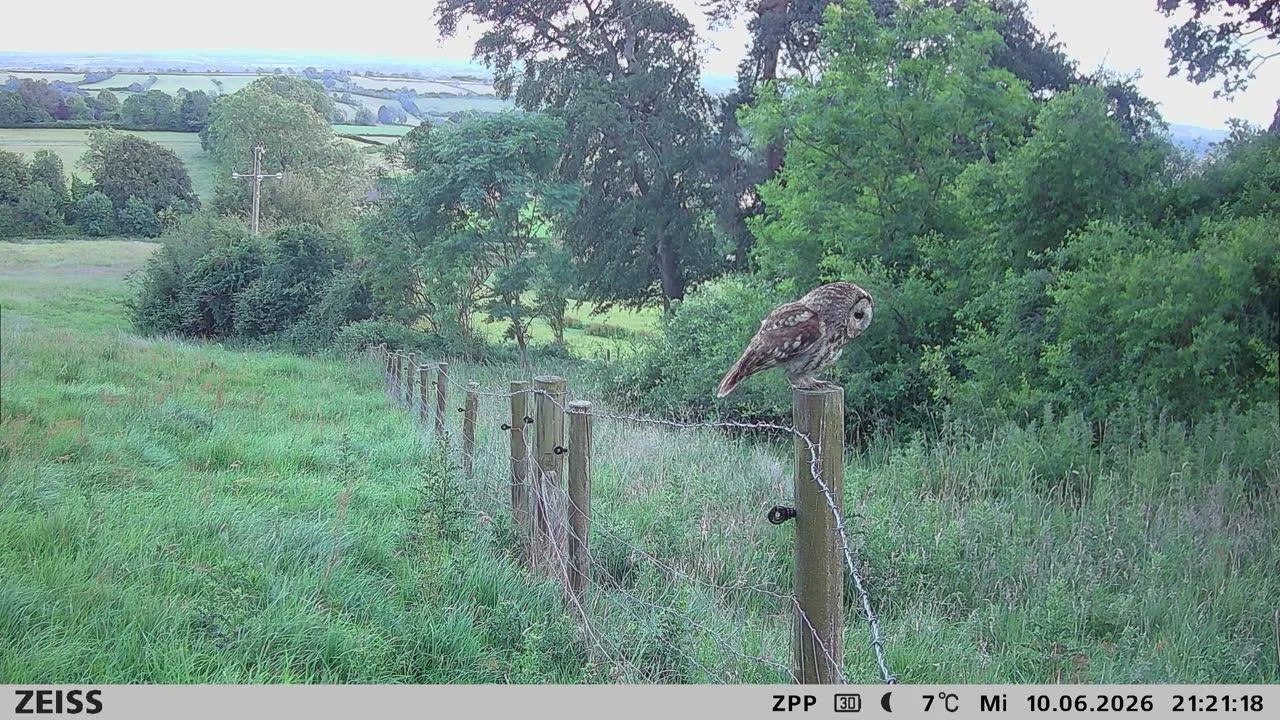
Juvenile tawny owl sighting at Sleight Farm
Some of the most valuable ecological surveys happen when nobody is there.
Day and night, wildlife cameras positioned across the Biofarm habitat bank at Sleight Farm quietly record the comings and goings of the species that live, feed and move through the landscape. Offering a glimpse into a world that is often hidden from view, they help us understand how wildlife is responding as habitats develop and mature.
Recent footage has captured badgers, fallow deer, barn owl and a juvenile tawny owl. We have also recorded bullfinches, a species on the UK's Amber List of conservation concern.
Individually, these sightings are exciting.
Together, they help build a picture of a landscape that is becoming increasingly rich and diverse.
A view we rarely get to see
Much of nature's activity happens beyond our view.
Badgers emerge long after people have gone home. Barn owls hunt silently across grassland at dusk. Roe deer move through the landscape at first light, while young tawny owls remain hidden among woodland canopies.
Wildlife cameras give us the opportunity to observe some of these moments and better understand how different species are interacting with the habitats taking shape across the farm.
Reading the signs
While botanical surveys help us understand how habitats are developing, wildlife offers another perspective.
As part of our ongoing Biodiversity Net Gain monitoring, wildlife cameras help us understand how species are responding as habitats develop over time.
The barn owl depends on healthy populations of small mammals. Bullfinches rely on scrub, hedgerows and woodland edge habitat. Roe deer need a connected landscape that provides food, shelter and cover.
Their presence alone doesn't tell the whole story.
But taken together, these records provide encouraging evidence that the habitats being established at Sleight Farm are beginning to support a wider range of species.
A landscape coming to life
The latest footage from Sleight Farm captures just a few moments in time.
Together, they reveal a landscape alive with activity, much of it happening when nobody is watching.
These early signs are encouraging. But habitats don't become rich and diverse overnight, and ecological recovery doesn't happen by accident.
It takes time, careful management and a long-term commitment to creating the conditions wildlife needs to thrive.
As habitats continue to establish and mature across Sleight Farm, monitoring helps us understand how the landscape is responding and where further opportunities for improvement exist.
For us, that's one of the most rewarding parts of the process: seeing nature respond, species by species, as the foundations for a thriving ecosystem take shape.