
You don’t need to overhaul your land to restore it. Sometimes, the right system does the heavy lifting for you.
Tamworth pigs are a simple example of that.
They’re being used across England to reinstate natural processes, improve biodiversity, and create practical, long-term value through Biodiversity Net Gain (BNG).
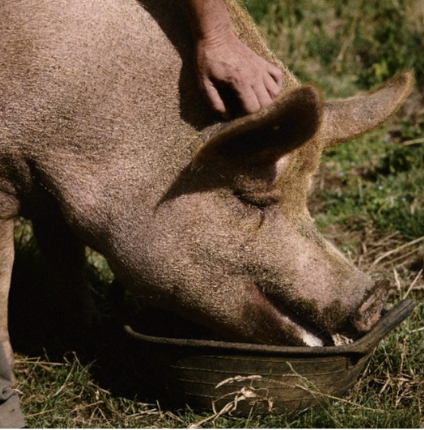
Tamworth pigs doing what they do best at Biofarm’s Habitat Bank at Sleight Farm - turning soil, restoring habitats and helping land deliver more through natural processes
What Tamworth pigs actually do for the land
Tamworth pigs act as a proxy for wild boar, a species that once played a key role in shaping British landscapes. As they root through the soil:
They turn over the top layer, burying dominant grasses
They expose dormant seed banks, allowing wildflowers to return
They create patchy, varied ground conditions
This kind of disturbance is:
Irregular
Responsive to the land
Difficult to replicate with machinery
The result is a more diverse, resilient habitat.
Why this matters for biodiversity
This isn’t about creating a perfect landscape. It’s about creating the right conditions for nature to respond.
Tamworth pigs help to:
Increase plant diversity without reseeding
Create habitats for invertebrates and birds
Break up uniform grassland
In short, they reintroduce the kind of variability that many species depend on.
A practical alternative to mechanical intervention
Traditional land restoration often relies on:
Heavy machinery
Uniform soil disturbance
High upfront costs
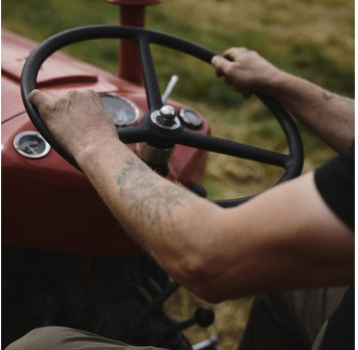
Heavy machinery has its place. But not every landscape needs it. Natural processes can often do the job more effectively.
Tamworth pigs offer a different route:
Lower intervention
Lower input
More adaptive outcomes
They don’t follow a plan on paper. They respond to what’s in the ground.
How this supports BNG on your land
By improving habitat condition and diversity, land managed this way can:
Generate biodiversity units
Support long-term habitat creation agreements
Align with low-input land management strategies
It’s a way to deliver BNG that works with the land, not against it.
How this fits alongside regenerative farming
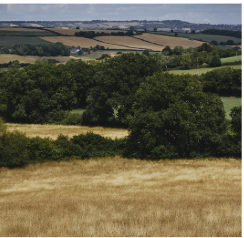
Regenerative farming systems create diverse, resilient landscapes
This isn’t about taking land out of production. Tamworth pigs can sit within a wider regenerative system:
Contributing to soil health
Supporting diverse pasture
Remaining part of a working farm business
They can also produce high-value meat, adding another layer of return.
One piece of land, more than one outcome
For landowners, the opportunity is in stacking value:
BNG units → long-term, contracted income
Livestock → premium meat from regenerative systems
Stewardship → potential environmental payments
The same land, working harder across multiple outcomes.
Restoring natural processes, not forcing change
This isn’t about radical change. It’s about restoring natural processes. Tamworth pigs are just one example of how that can work in practice.
For landowners navigating BNG and changing policy landscapes, it offers a route that is:
Practical
Commercially relevant
Grounded in how land actually functions
Making your land work harder, without overcomplicating it
BNG can feel complex. Diversifying land use even more so. That’s where Biofarm comes in. We work with landowners to:
Understand what your land can deliver
Unlock BNG in a way that fits your existing operation
Create long-term income streams without taking control away from you
From habitat creation to 30-year management, we handle the detail so you can focus on the bigger picture.
You know your land best. We’re here to help you make more of it.