
Sleight Farm Habitat Bank
A 70-hectare registered habitat bank where former grazing land is being restored into species-rich lowland meadow — delivering Biodiversity Net Gain with lasting ecological value.
Habitat Bank · Bath & NE Somerset, West of England
Overview
A landscape in recovery
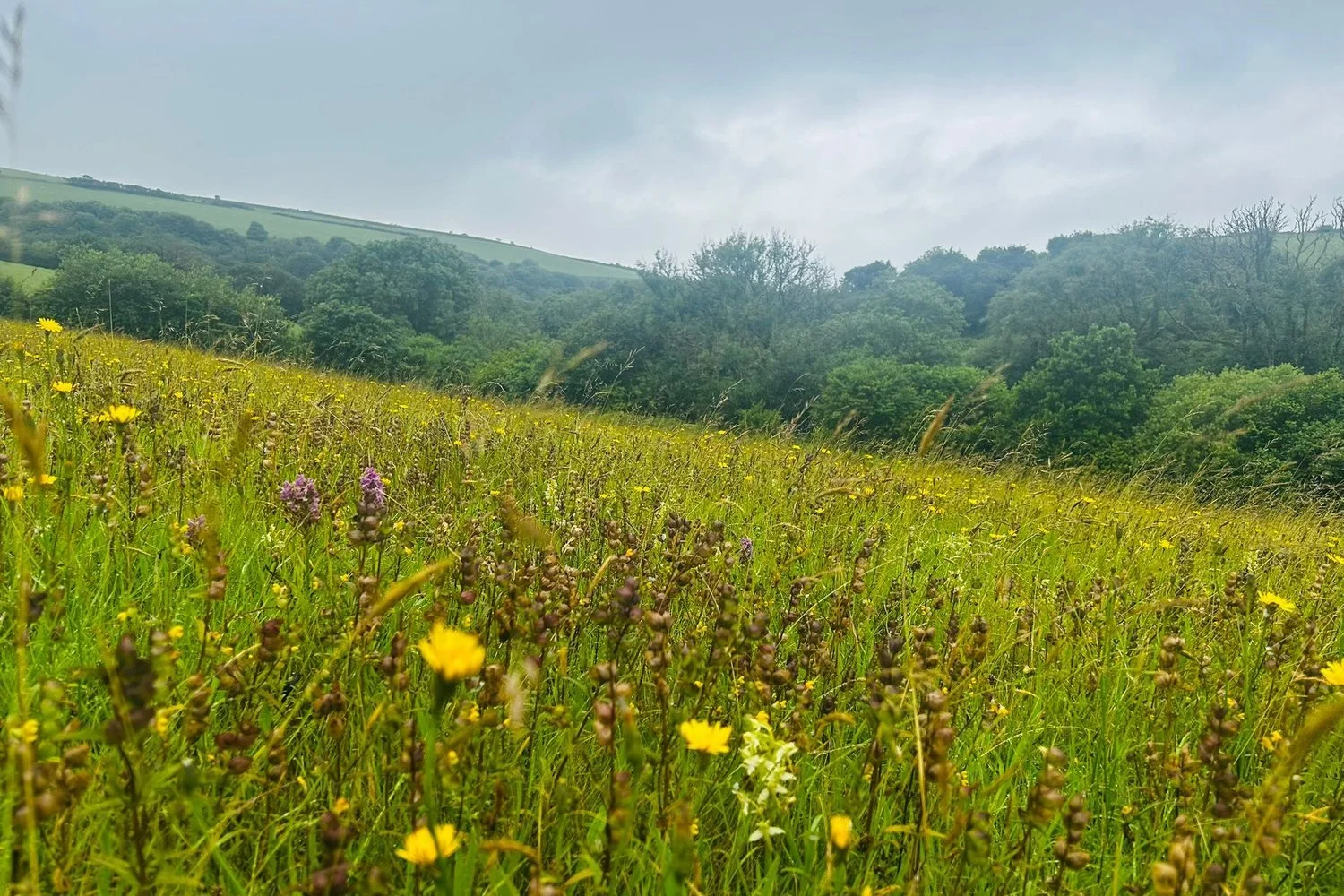
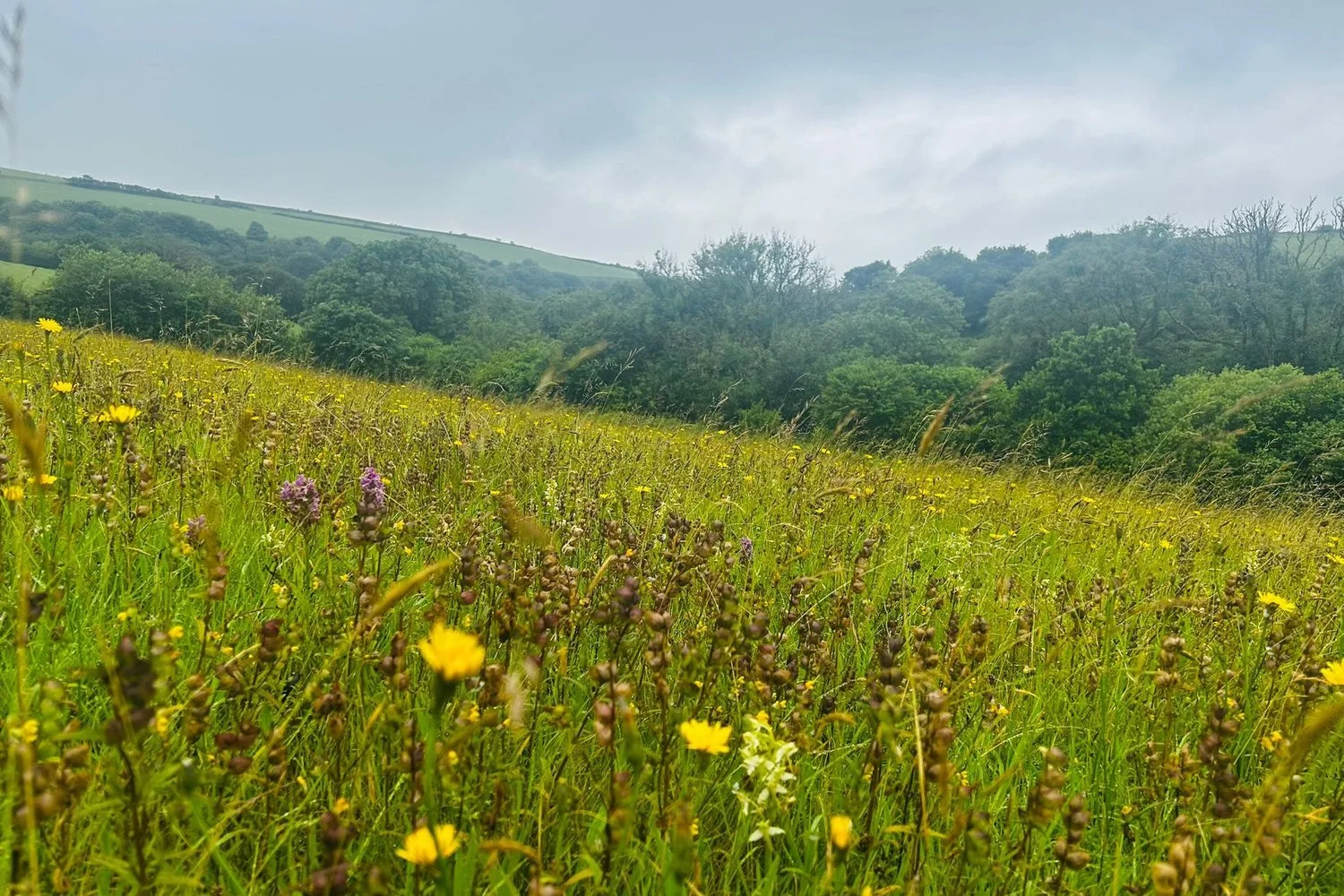
Sleight Farm is a 70-hectare registered habitat bank in South West England. Once a heavily grazed sheep and goat farm, the site is being carefully managed to allow species-rich grassland to re-establish — creating high-quality, locally available Biodiversity Net Gain for nearby development.
Through conservation grazing, carefully timed hay cuts and ongoing monitoring, the grasslands are beginning to reveal what remains within the site’s natural seed bank. Recent surveys recorded lowland meadow indicator species and the first bee orchid on the site.
Location & areas served
Where it is, and where it can help
Sleight Farm is well placed to serve nearby local planning authorities across the South West. The solid area is the local zone — the host LPA (Bath & NE Somerset) and National Character Area (Bristol, Avon Valleys & Ridges) — where units apply at full value under the biodiversity gain spatial risk multiplier. The hatched area shows neighbouring LPAs and NCAs, where units remain eligible at an adjusted rate (0.75×). Beyond that, we deliver nationally.
↓ The two-tier catchment map (map-block-sleight-INLINE.html) goes in the section directly below.
LPAs served (trading area)
Habitat units & types
What’s available
Sleight Farm offers 374 registered BNG units across 70 hectares. Habitats are created and enhanced using proven, low-intensity farming practices to deliver measurable biodiversity gains.
| Habitat type | Broad group |
|---|---|
| Lowland meadow | Grassland |
| Other neutral grassland | Grassland |
| Broadleaved woodland | Woodland |
| Mixed scrub | Scrub |
| Native hedgerows | Hedgerow |
| Individual trees | Trees |
| Ditches | Watercourse |
About the land & its legacy
From grazing land to living meadow
For years, much of Sleight Farm supported relatively species-poor grassland under heavy grazing. Rather than force change, our management has focused on creating the conditions for nature to recover — letting the grasslands re-establish and reveal the diversity held within the soil.
That patience is beginning to pay off. Areas once classified as modified grassland are developing the characteristics of more diverse, neutral grassland, while one parcel is moving towards lowland meadow.
Ecological ambition & long-term stewardship
Managed for at least 30 years
Species-rich grassland
Establishing lowland meadow through conservation grazing, timed hay cuts and green-hay spreading of locally adapted wildflower seed.
Structural diversity
Grazing by ponies and cattle creates variation in sward height and structure, supporting invertebrates, small mammals and reptiles.
Evidenced monitoring
Ongoing botanical and wildlife monitoring tracks progress year on year — from meadow indicator species to barn owls and a juvenile tawny owl.
The recovery so far
A landscape finding its character
A heavily grazed farm
Sleight Farm came to us as a sheep and goat farm, with relatively species-poor grassland and limited botanical diversity.
Conservation grazing & hay cuts
We introduced conservation grazing by ponies and cattle and carefully timed hay cuts, creating the conditions for nature to recover.
Meadow indicators & a first bee orchid
Knapweed, bird’s-foot trefoil, betony and pignut recorded — and the first bee orchid on the site. Read the survey →
Owls, badgers & bullfinches
Cameras recorded barn owl, a juvenile tawny owl, badgers, fallow deer and Amber-list bullfinches. See what we found →
Green-hay spreading
Green hay from the richest areas will be spread across the site to accelerate the spread of wildflowers.
What we’ve recorded
Signs of a habitat coming to life
Bee orchid
The first recorded on the site — a strong signal of developing species-rich grassland.
Knapweed
Abundant in the area managed for lowland meadow; a characteristic meadow species.
Bird’s-foot trefoil
A lowland meadow indicator that supports pollinators across the sward.
Barn & tawny owl
Recorded on wildlife cameras — owls depend on healthy small-mammal populations.
Badger & fallow deer
Moving through a landscape that increasingly offers food, shelter and cover.
Bullfinch
On the UK’s Amber List — relies on scrub, hedgerow and woodland-edge habitat.
Photography & gallery
Sleight Farm through the seasons
Representative imagery — replace with Sleight Farm photography.
Resources
Download the detail
Overview, habitats & location · PDFDownload Ecology & monitoring report
Botanical & wildlife survey summary · PDFDownload BGS registration
Biodiversity Gain Sites Register · linkView Unit price guide
Pricing & availabilityOn request
Placeholder resources — wire to the real documents.
Related habitat banks
Explore more of our network
Enquire about units
Talk to us about Sleight Farm
Tell us a little about your scheme and we’ll come back with unit availability, habitat types and pricing.
↓ For a working submission, replace this styled placeholder with a native Squarespace Form Block (it connects to email/Google Sheets/CRM automatically). The markup below is design-only.
Ready to talk units?
Secure Biodiversity Net Gain at Sleight Farm
Get in touch to discuss unit availability, habitat types, pricing and planning requirements for your development.